














Summary
- The Evolution of Workplace Safety: 1996 to 2026
- Three Decades of Safety Leadership
- 2026 National Safety Month Themes
- Comprehensive National Safety Month 2026 Programming
- National Safety Month for Different Industries
- Celebrating Safety Leadership and Progress
- Accessing Quality Safety Resources for the 30th Anniversary
- Looking Forward: National Safety Month Beyond 30 Years
- Conclusion
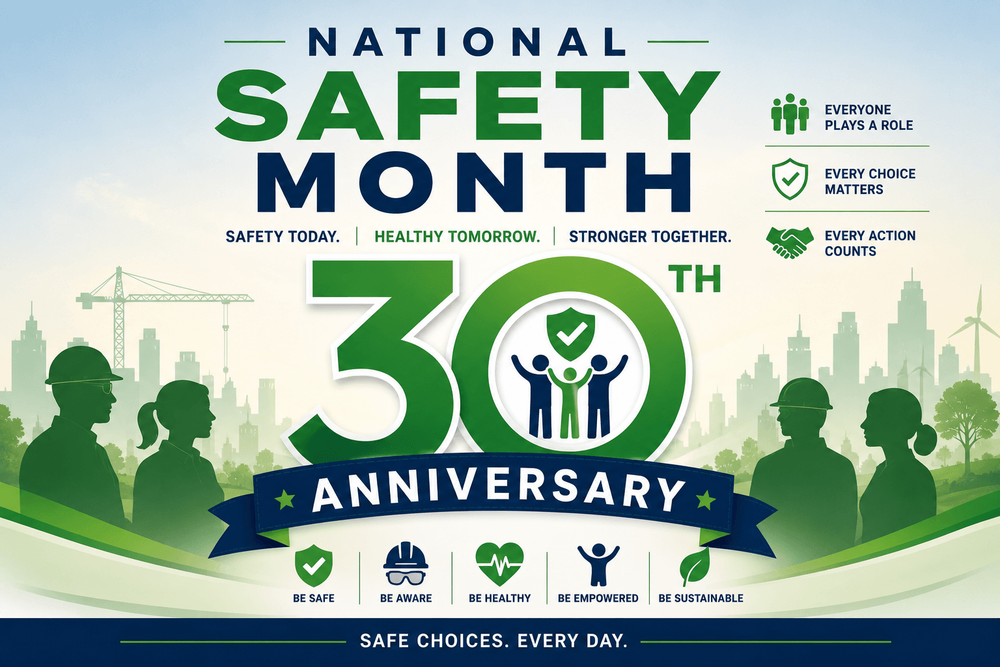
June 2026 marks the 30th Anniversary of National Safety Month, a milestone celebration reflecting three decades of coordinated workplace safety efforts that have saved countless lives and prevented immeasurable suffering. Since the National Safety Council first designated June as National Safety Month in 1996, this annual observance has become the nation's largest safety awareness campaign, mobilizing organizations across industries to prioritize injury prevention and create safer work environments.
The Evolution of Workplace Safety: 1996 to 2026
The establishment of National Safety Month 30 years ago reflected growing recognition that workplace injuries and illnesses were preventable rather than inevitable occupational costs. Since 1996, significant progress has been made: workplace fatality rates have declined substantially through improved safety standards, engineering controls, and training; technological innovations including automated safety systems and protective equipment have enhanced worker protection; regulatory frameworks like OSHA standards have strengthened workplace safety requirements; and cultural shifts have increasingly prioritized worker health and safety as organizational values.
Yet challenges remain. Despite decades of safety advancement, approximately 4,600 workers still die annually from work-related injuries in the United States, with millions more suffering non-fatal injuries requiring medical treatment or resulting in lost work time. Certain industries—construction, healthcare, transportation, manufacturing—continue experiencing elevated injury rates. Emerging hazards from technological changes, shifting work arrangements, and evolving workplace designs require ongoing safety innovation and adaptation.
The 30th Anniversary of National Safety Month 2026 provides opportunities to celebrate progress while recommitting to continued advancement in workplace safety. Organizations should use this milestone year to assess safety achievements, identify remaining challenges, and establish new safety priorities positioning their workforces for continued protection and health.
Three Decades of Safety Leadership
Over 30 years, National Safety Month has evolved from primarily awareness campaign to comprehensive, action-oriented initiative. Early years emphasized hazard awareness and prevention basics. As years progressed, the observance incorporated evidence-based safety science, industry-specific approaches addressing unique occupational hazards, and comprehensive strategies addressing both physical safety and worker wellbeing.
The National Safety Council, organization founding National Safety Month, has maintained leadership in safety science throughout three decades. Research, education, and advocacy from NSC and partner organizations have driven improvements in workplace safety standards, safety technology, and organizational safety culture development. Organizations participating in National Safety Month benefit from accumulated knowledge and evidence-based practices NSC has compiled and promoted.
Celebrating National Safety Month's evolution honors individuals and organizations advancing workplace safety: safety professionals dedicating careers to protecting workers, organizational leaders prioritizing safety investments despite competing demands, workers advocating for their own safety and peers' protection, and researchers developing evidence-based safety interventions. This anniversary year provides opportunities to recognize these safety champions.
2026 National Safety Month Themes
National Safety Month 2026 features weekly themes addressing different dimensions of workplace safety:
Week 1: Continuous Improvement
The month begins with emphasis on continuous improvement in safety systems and practices. Effective safety requires regular assessment of hazards and controls, review of near-miss and incident data identifying patterns suggesting systemic issues, and implementation of improvements based on findings. Organizations should conduct safety assessments identifying current practices, areas needing strengthening, and opportunities for innovation.
Continuous improvement recognizes that static safety programs become outdated as workplaces evolve. New equipment, revised processes, workforce changes, and emerging hazards require regular reassessment and adaptation. Safety professionals should review National Safety Council resources highlighting current best practices and emerging safety innovations.
Week 2: Employee Engagement
The second week emphasizes employee engagement as critical component of workplace safety culture. Workers on front lines encounter hazards directly and often identify risks before management becomes aware. Engaged employees participate in safety discussions, report hazards and near-misses, suggest improvements, and support peers' safety compliance. Organizations fostering employee engagement in safety decisions and valuing worker input typically achieve better safety outcomes.
Strategies promoting employee engagement include involving workers in safety committee participation, soliciting and implementing worker suggestions for safety improvements, recognizing and celebrating safety contributions, and establishing psychological safety where workers feel comfortable raising concerns without fear of retaliation.
Week 3: Roadway and Transportation Safety
The third week focuses on vehicle safety, recognizing that roadway crashes represent leading cause of workplace fatalities. Prevention includes driver training emphasizing defensive techniques, vehicle maintenance ensuring safe operating condition, policies prohibiting distracted or impaired driving, and fatigue management for workers driving long distances. Organizations with significant transportation operations should emphasize roadway safety during this week.
Week 4: Wellbeing
The month concludes with emphasis on total worker wellbeing recognizing that comprehensive safety includes physical, mental, and emotional health. Fatigue management, mental health support, substance abuse prevention, and stress management all contribute to worker safety. When workers are rested, mentally healthy, and managing stress effectively, they make better safety decisions and have capacity to engage with safety programs.
Comprehensive National Safety Month 2026 Programming
Organizations marking the 30th Anniversary of National Safety Month should implement strategic programming throughout June:
Pre-Campaign Preparation (May)
Begin assembling resources well before June: identify safety priorities based on injury data and hazard assessments, schedule training sessions and speakers, coordinate departmental activities, order printed materials and supplies, and establish communication strategies reaching all personnel including those on non-standard schedules.
Develop campaign themes reflecting organizational context: for construction companies, emphasize fall prevention and equipment safety; for healthcare, focus on patient handling and workplace violence prevention; for manufacturing, highlight machine guarding and chemical safety. Industry-specific campaigns achieve better engagement than generic safety messages.
Engage safety committees, employee representatives, and key stakeholders in campaign planning ensuring buy-in and incorporating diverse perspectives.
Week 1: Launch and Continuous Improvement Focus
Begin with leadership statements from executives or senior officials emphasizing safety commitment and the historic milestone of NSM's 30th Anniversary. Conduct safety assessments in different departments or locations, examining current hazards, control effectiveness, and improvement opportunities. Distribute safety materials ensuring all personnel receive educational resources.
Feature safety innovations and improvements implemented over previous year, highlighting organizational commitment to continuous advancement. Recognition of safety investments and improvements reinforces that safety is organizational priority.
Week 2: Employee Engagement Activities
Implement activities promoting employee participation in safety: safety committees holding special sessions during NSM, employee suggestion competitions for safety improvements with recognition/rewards for accepted suggestions, and safety huddles or toolbox talks allowing workers to discuss safety at unit level.
Highlight employee-contributed safety improvements from past year, recognizing workers' contributions to safer workplaces. When workers see their ideas implemented and receive recognition, they feel valued and continue engaging with safety efforts.
Week 3: Roadway Safety Emphasis
For organizations with transportation components, conduct defensive driver training, vehicle fleet safety inspections, and driver recognition programs celebrating safe driving records. Distribute materials on distracted and impaired driving prevention. Encourage safe commute practices for all employees traveling to/from work.
Week 4: Wellbeing and Sustained Commitment
Use the final week emphasizing holistic wellbeing and year-round safety commitment. Feature health and wellness resources addressing physical, mental, and emotional health. Recognize outstanding safety performers and teams. Distribute materials personnel can reference after NSM concludes.
Establish ongoing safety programming: regular safety meetings, periodic training on critical topics, near-miss reporting systems, hazard assessment updates, and continuous evaluation of safety performance and culture.
National Safety Month for Different Industries
While foundational safety principles apply across sectors, effective NSM programming addresses industry-specific hazards:
Construction Industry
Construction remains highest-risk industry for worker fatalities. OSHA's "Focus Four" hazards—falls from elevation, struck-by incidents, electrocutions, and caught-in/between accidents—account for majority of construction deaths. Construction NSM programming should emphasize these hazards through training, hazard identification activities, equipment inspections ensuring proper condition, and recognition programs celebrating jobsites maintaining strong safety records.
QuickSeries pocket guides addressing fall prevention, electrical safety, excavation safety, and equipment operation provide construction workers with portable references accessible on jobsites. The durable, water-resistant construction withstands construction environments.
Manufacturing and Industrial Safety
Manufacturing facilities present diverse hazards from machinery, chemicals, noise, and repetitive work. NSM programming should address machine guarding ensuring all dangerous moving parts have appropriate guards, chemical safety including hazard communication training, hearing protection programs preventing occupational hearing loss, and ergonomic initiatives reducing repetitive strain injuries.
Machine guarding audits identifying unguarded or improperly guarded equipment, refresher training on guard requirements, and maintenance ensuring guards remain functional represent critical NSM activities.
Healthcare Safety
Healthcare workers face unique injury hazards including patient handling injuries, sharps injuries from needles or surgical instruments, workplace violence, and exposure hazards including bloodborne pathogens. Healthcare NSM programming should address patient handling safety through safe lifting techniques and equipment maintenance, sharps safety emphasizing proper disposal and safety-engineered devices, violence prevention including de-escalation training and environmental security, and occupational exposure prevention through appropriate personal protective equipment and engineering controls.
Warehouse and Logistics
Warehouse and logistics operations involve forklifts, elevated work, material handling, and loading/unloading operations. NSM programming should emphasize forklift safety through operator training and equipment maintenance, fall prevention for elevated work, and struck-by prevention through pedestrian-forklift separation and load securing.
Celebrating Safety Leadership and Progress
The 30th Anniversary of National Safety Month provides unique opportunities to celebrate safety progress and recognize safety leaders:
Historical Perspective
Feature information about National Safety Month's evolution over 30 years: statistical progress such as fatality rate reductions, innovations in safety technology, and evolution of safety practices. Historical perspective helps current workers appreciate safety advances and recognize continued progress remains important.
Safety Professional Recognition
Recognize safety professionals—internal safety staff, external consultants, NSC members—who have dedicated careers to protecting workers. Feature their work, contributions, and commitment to safety excellence.
Organizational Leadership Recognition
Recognize organizations demonstrating exceptional safety performance and commitment. Many industries and communities feature safety awards recognizing outstanding achievement. Organizations nominated for or receiving awards should be celebrated for their accomplishment and leadership.
Worker Recognition
Recognize workers demonstrating exceptional safety performance, reporting hazards, suggesting improvements, or supporting peers' safety. Worker recognition reinforces that safety is valued at all organizational levels.
Accessing Quality Safety Resources for the 30th Anniversary
Organizations commemorating National Safety Month's 30th Anniversary should partner with experienced providers offering comprehensive safety materials. QuickSeries has extensive experience creating safety resources for construction, manufacturing, healthcare, and other industries for three decades corresponding with NSM's history.
Our materials reflect current safety science and OSHA standards while being accessible to diverse worker populations. Federal agencies can access materials through GSA Schedule procurement.
The QuickConnect app enables digital distribution of safety content reaching all personnel regardless of location. Digital platforms allow safety messages, training videos, resource directories, and interactive tools accessible whenever needed.
Pocket guides on industry-specific hazards provide portable references workers carry continuously. Laminated, durable construction ensures materials withstand workplace environments.
Posters placed strategically keep safety messaging visible year-round. Special 30th Anniversary NSM posters help mark the milestone while promoting ongoing safety culture.
Custom solutions incorporating organization-specific information ensure materials feel immediately relevant and actionable.
Looking Forward: National Safety Month Beyond 30 Years
As National Safety Month enters its fourth decade, ongoing challenges remain: preventing injuries in evolving work environments, addressing emerging hazards from technology and changing work arrangements, reducing disparities in workplace safety affecting certain industries and worker populations, and maintaining focus on prevention in environments where incident pressures may compete with safety priorities.
Organizations should view the 30th Anniversary as both celebration of progress and renewal of commitment to continued safety advancement. Establishing new safety goals, implementing innovative prevention approaches, and recommitting to safety culture development position organizations for continued progress in the next decade.
Conclusion
National Safety Month's 30th Anniversary in June 2026 marks significant milestone celebrating three decades of coordinated workplace safety efforts that have prevented countless injuries and deaths. While substantial progress has been achieved since NSM's establishment in 1996, work remains preventing remaining workplace injuries and illnesses.
The resources you provide during this milestone anniversary month—safety assessments identifying hazards and improvement opportunities, training programs building worker competence, hazard controls preventing injury exposure, and recognition programs celebrating safety achievements—contribute to maintaining momentum toward continued workplace safety advancement.
Begin planning your National Safety Month 2026 campaign now, assessing current safety performance, identifying priority areas for improvement, and establishing resources and programming that will make June a meaningful celebration of safety progress while launching sustained improvements in the year ahead. Visit QuickSeries.com to explore our comprehensive workplace safety resources including industry-specific pocket guides, safety training materials, compliance references, occupational health resources, and digital distribution solutions. Contact our team to discuss custom solutions addressing your organization's specific safety challenges and commemorating the 30th Anniversary of National Safety Month, or request samples to evaluate materials before finalizing your safety campaign. Together, we can celebrate safety progress while continuing the important work of protecting workers and preventing preventable injuries.